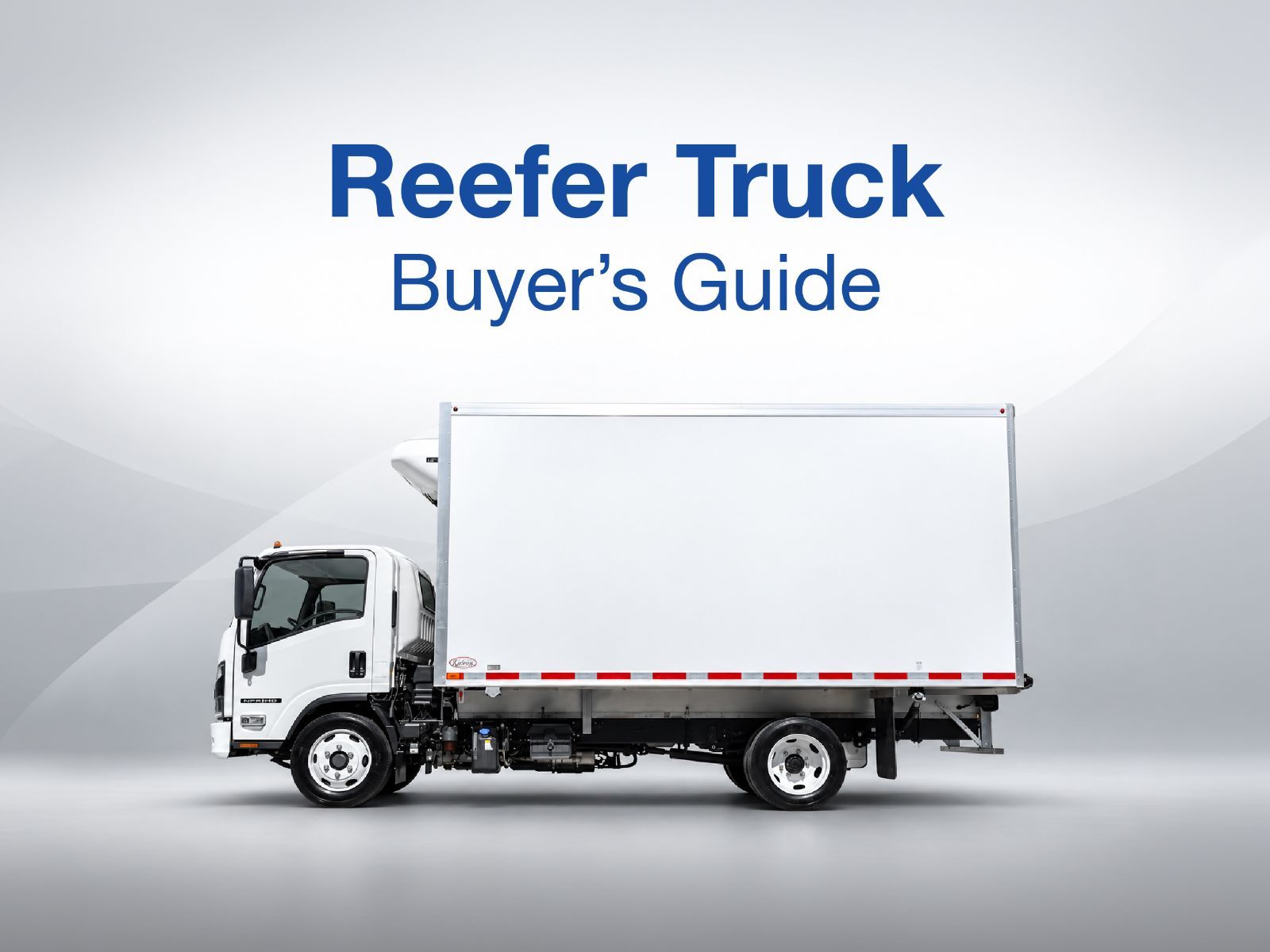
Choosing a refrigerated truck, often called a reefer truck, is about more than finding a cargo body that stays cold.
The truck needs to carry the weight and volume of your products, maintain the required temperature throughout the route and make loading and unloading practical for your team.
Those requirements can vary considerably between a produce distributor, frozen-food supplier, bakery, restaurant supplier or prepared-meal delivery business.
A truck that is too small may require additional trips. A truck that is larger than necessary can add operating costs and make urban deliveries more difficult. A refrigeration system that is not suited to the cargo can put the products being transported at risk.
For businesses comparing Isuzu refrigerated trucks, the right configuration starts with understanding what the vehicle will actually be expected to do.
Find the Right Truck for Your Business
Compare available refrigerated trucks and explore Isuzu options for your payload, route and temperature-control needs.
Browse Refrigerated Trucks >
Start With Your Products and Delivery Routes
The right refrigerated truck starts with what your business needs to carry. A fresh produce distributor, for example, may have very different requirements from a company transporting pharmaceutical products.
Fresh produce can vary in temperature and airflow requirements depending on the product, while pharmaceutical transportation may require specific storage conditions, temperature monitoring and documented controls throughout the route. The products being transported therefore influence more than the refrigeration unit itself.
Weight and daily operating conditions matter just as much. A truck carrying dense loads over longer routes may require a different chassis configuration than one making lighter, frequent deliveries throughout the city.
Here is how those priorities could differ:
| Business Type |
Cargo Priority |
Refrigeration Priority |
Truck Configuration Priority |
| Fresh Produce |
Product weight, volume, pallet capacity and airflow |
Maintaining appropriate temperatures while managing frequent door openings and product respiration |
Sufficient payload and body capacity for the expected route without unnecessarily oversizing the truck |
| Pharmaceuticals |
Product protection, handling requirements and secure storage |
Maintaining labelled storage conditions with appropriate monitoring, temperature mapping and contingency planning |
A configuration suited to the route while supporting the required temperature-control and monitoring equipment |
The important takeaway is to start with the cargo and route, then determine which truck can support these requirements.
What Size Refrigerated Truck Do You Need?
Refrigerated trucks are often described using terms such as cube reefer, 5-ton reefer truck, refrigerated box truck or refrigerated straight truck.
These descriptions can help narrow the search, but they don’t tell you how much cargo a truck can actually carry.
Compare the Isuzu N-Series by GVWR
The Isuzu N-Series is available across several weight classes. Current Canadian configurations range from a 12,000 lb GVWR NPR Gas to a 19,500 lb GVWR NRR. Depending on the chassis, wheelbase and cab configuration, N-Series trucks can accommodate a range of commercial body sizes.
| N-Series Configuration |
GVWR |
General Refrigerated-Truck Application |
| NPR Gas |
12,000 lb |
Smaller local routes, lighter loads and compact refrigerated bodies |
| NPR-HD Gas or Diesel |
14,500 lb |
Local food delivery requiring additional body and payload capacity |
| NPR-XD Diesel |
16,000 lb |
Higher-capacity diesel applications |
| NQR Gas or NRR Derate Diesel |
17,950 lb |
Larger bodies and heavier delivery requirements |
| NRR Gas or Diesel |
19,500 lb |
Higher-capacity refrigerated straight-truck applications |
These applications should be treated as general guidance rather than fixed rules.
The right chassis depends on the weight of the completed refrigerated truck, including the body, refrigeration unit, equipment and cargo.
GVWR Is Not the Same as Cargo Payload
One of the most important numbers to confirm when purchasing a refrigerated truck is its usable payload.
GVWR represents the maximum permitted operating weight of the completed vehicle. That includes:
- Chassis and cab
- Insulated cargo body
- Refrigeration equipment
- Fuel and fluids
- Driver and passengers
- Liftgate, ramp or shelving
- Cargo
The weight of the refrigerated body and equipment therefore needs to be deducted before determining how much product the truck can legally carry.
A simplified calculation is:
Usable cargo payload = GVWR − completed vehicle weight − occupants and carried equipment
For example, a completed refrigerated truck with a 19,500 lb GVWR that weighs 12,000 lb with the body, refrigeration equipment, fuel and installed equipment would have approximately 7,500 lb remaining for occupants, loose equipment and cargo. Individual front and rear axle limits must still be considered.
When comparing trucks, it’s important to understand the completed vehicle weight and available payload, rather than relying only on the chassis rating.
What Does “5-Ton Reefer Truck” Mean?
Businesses searching for a 5-ton reefer truck for sale are generally looking for a medium-duty refrigerated straight truck. However, “5-ton” doesn’t necessarily mean the completed vehicle can carry 10,000 lb of cargo.
The actual payload depends on how the truck is configured. The refrigerated body, insulation, refrigeration unit, liftgate, shelving and other installed equipment all add weight before any product is loaded. Body size and wheelbase can also affect the completed vehicle weight and available capacity.
For that reason, “5-ton reefer truck” is better used as a general truck category. When comparing vehicles, look at the completed vehicle weight, available payload and axle ratings to understand how much product the truck can actually carry.
Choose a Reefer Beyond its Body Length
Usable refrigerated cargo space is not just about how much product can physically fit inside the body. Cold air needs enough room to circulate around the load so the refrigeration system can maintain a more consistent temperature throughout the cargo area.
When comparing refrigerated bodies, consider:
- Interior length, width and height
- Usable cubic capacity
- Pallet capacity and orientation
- Door-opening dimensions
- Evaporator clearance
- Space required around the cargo for airflow
Packing a refrigerated body to its physical limit can restrict air movement and create uneven temperatures within the load. For temperature-sensitive products, the goal isn’t to just maximize cargo space, but also choosing a body that provides enough usable space without compromising airflow.
Match the Refrigeration System to Your Cargo
The chassis determines how much the truck can support, but the refrigerated body and cooling system determine whether it can maintain the conditions required by the cargo. Two trucks built on the same Isuzu chassis can therefore perform very differently depending on how they’re configured.
What Temperature Range Does Your Refrigerated Truck Need?
The right refrigeration system depends first on the temperature the product needs to maintain. General Canadian food-safety guidance identifies temperatures between 4°C and 60°C as the food-safety danger zone. Refrigerated food is generally kept between 0°C and 4°C, while frozen food is commonly maintained at −18°C or lower. Product-specific requirements and applicable food-safety plans should always be confirmed.
Route conditions matter as well. Frequent stops, repeated door openings and hot summer temperatures can make it harder for the system to maintain a consistent cargo temperature.
Fresh Produce Has Different Requirements
Fresh produce is not simply a matter of keeping the cargo area as cold as possible. Different products may require different temperatures, humidity levels and airflow conditions.
For businesses carrying several types of produce, a partitioned or multi-temperature body may be more appropriate than a single cargo compartment. Washable interior surfaces and drainage can also make day-to-day operation easier.
Frozen Products Place Greater Demands on the System
Frozen products generally place greater demands on both the refrigeration unit and the insulated body. The system needs to maintain the required temperature throughout the route and recover efficiently after the cargo area is opened.
For this type of application, refrigeration capacity, insulation, defrost capability and temperature monitoring become especially important. The body should also be pre-cooled before temperature-sensitive cargo is loaded.
Engine-Driven, Stand-Alone or Electric-Standby Refrigeration
Refrigerated truck configurations can use different methods to power the cooling system. How the refrigeration unit receives power can affect how well the truck fits your route.
Engine-driven refrigeration uses power associated with the truck's engine, while stand-alone refrigeration uses a separate power source. Some systems may also offer electric standby. It allows the unit to run from an external electrical supply while the truck is parked. This can support pre-cooling, overnight staging and temperature maintenance without requiring the truck engine to remain running.
Not sure which system is right for your application? Connect with our truck specialists to help you find the best refrigerated unit for food delivery.
Choose the Right Isuzu N-Series Chassis
Once the required body size, payload and temperature range have been established, the next step is selecting the chassis.
Gas or Diesel?
Current Canadian Isuzu N-Series configurations include both gas and diesel powertrains. The better choice depends less on fuel type alone and more on how the truck will operate each day.
Annual kilometres, city versus highway driving, expected payload, operating costs and planned ownership period can all influence the decision. A truck completing frequent local deliveries may have different priorities from one travelling longer distances with heavier loads.
The goal is to choose the powertrain and chassis configuration that best fits the truck's expected duty cycle.
Consider Axle Ratings and Weight Distribution
GVWR is not the only weight limit that matters. A completed refrigerated truck must also remain within its front and rear Gross Axle Weight Ratings.
Body equipment, refrigeration components, cargo placement and accessories such as a liftgate can change how weight is distributed across the truck. This means an individual axle can reach its limit before the vehicle reaches its overall GVWR.
When reviewing a completed configuration, confirm its front and rear axle weights alongside the available payload. If the required body and cargo exceed the capabilities of an N-Series configuration, a different chassis may need to be considered.
Select the Right Doors and Loading Equipment
A refrigerated truck can have sufficient cargo capacity and still be inefficient if employees have difficulty loading and unloading it. Door and loading-equipment choices should reflect the stops the truck regularly makes.
Barn Doors Versus Roll-Up Doors
Barn doors provide a wide rear opening but require clearance behind the truck to swing open. Roll-up doors open vertically, which can make them more practical in tighter delivery areas, although the tracks and overhead door can reduce some interior clearance.
The better choice depends on where the truck will normally load and unload, the space available at those locations and how frequently the cargo area will be accessed.
Walk-Ramp Versus Liftgate
A walk-ramp can work well when products are moved by hand, dolly or lighter rolling equipment. A liftgate can make ground-level deliveries easier when heavier carts or pallets need to be moved.
The trade-off is weight. A liftgate becomes part of the completed vehicle and reduces the payload available for cargo, so its capacity and impact on the finished truck should be considered before the configuration is finalized.
Refrigerated Truck Buying Checklist
Before choosing a refrigerated truck, make sure you understand the completed vehicle rather than evaluating only the chassis or body size. Reflect on the following questions, and how it may apply to your business:
- What is the completed vehicle weight and available cargo payload?
- What are the front and rear axle weights?
- How much usable interior and pallet space is available?
- Can the refrigeration system maintain the required product temperature under expected operating conditions?
- How is the refrigeration system powered, and what happens during extended stops?
- Does the body provide enough space for proper airflow around the cargo?
- Which door and loading configuration best fits the delivery route?
- How will equipment such as a liftgate affect available payload?
- Does the configuration provide enough capacity for expected business needs?
These questions make it easier to compare refrigerated trucks based on how they will actually perform in the business rather than relying only on purchase price, body length or model name.
Frequently Asked Questions
What size refrigerated truck do I need?
The right size depends on both cargo weight and usable refrigerated space. Start with the expected load, pallet or cargo volume and route requirements, then confirm the completed truck's payload and axle ratings.
Is a refrigerated box truck the same as a straight truck?
Not exactly. A refrigerated box truck describes a truck with an insulated, temperature-controlled cargo body, while a straight truck describes a vehicle where the cab, chassis and cargo body form one unit. Many refrigerated box trucks are also straight trucks.
What temperature should a refrigerated food truck maintain?
The required temperature depends on the product being transported and any applicable food-safety requirements. General Canadian guidance commonly places refrigerated food between 0°C and 4°C and frozen food at −18°C or lower, but product-specific requirements should always be confirmed.
Which Isuzu N-Series model is best for refrigerated delivery?
There is no single N-Series model that fits every refrigerated application. The appropriate chassis depends on the completed vehicle weight, required payload, body size and operating requirements of the business.
Planning a Refrigerated Truck for Your Business
Choosing the right refrigerated truck means matching the chassis, body and refrigeration requirements to what your business actually needs to transport.
Humberview Isuzu Trucks can help businesses evaluate Isuzu N-Series chassis options based on factors such as payload, body requirements and intended commercial use. Refrigeration equipment, bodies and other upfit components should be selected based on compatibility and the requirements of the completed vehicle.
Planning a refrigerated truck for your business? Contact Humberview Isuzu Trucks to discuss your application and the Isuzu chassis options that may be appropriate for your needs.
Already operating Isuzu trucks? Connect with our Service Department or Parts Department for maintenance, genuine Isuzu parts and ongoing vehicle support.